The temporal
identity layer.
Behavioral ZK-proofs for humans. Owner-signed permits for the agents they run. On-device and Solana-native, portable across every dApp.
Agents are becoming economic actors on Solana.
As autonomous activity grows, applications need a portable signal for returning human control. Entros is designed to build that signal through repeated behavioral verification and public Solana state.
Three human signals, one cryptographic commitment.
The Pulse
Voice, motion, and touch are captured during one session. The flow generates a fresh random challenge each time.
Raw motion and full-resolution touch stay on the device. The validation path receives derived features, phrase audio, timing summaries, and a coarse curve outline.
The Proof
A ZK proof that two committed fingerprints satisfy the configured Hamming-distance bounds.
Groth16 proof with minimum distance constraint blocks perfect replay attacks.
The Anchor
A non-transferable Solana token tied to your wallet. Trust Score grows with consistent re-verification over time.
Weekly verification span and account age contribute to the on-chain score.
Identity is a pattern.
Entros measures fingerprint distance across sessions. The current circuit proves a bounded relationship between supplied commitments. The research program measures whether that signal can support reliable returning-human continuity across people and devices.
First verification
You speak a phrase and trace a curve during one capture. The protocol validates the submitted evidence and stores a commitment.
Re-verification
A later capture produces a new commitment. The ZK proof checks that both commitments open correctly and that fingerprint distance stays inside the circuit bounds.
Trust compounds
Successful re-verifications extend the wallet's history. Trust Score reflects active weekly bins, recency, and account age.
Designed for the chain where agents already interact and transact.
Monthly transactions
Finality
Monthly active addresses
ZK stack
Where temporal proof changes the equation.
Sybil-Resistant Airdrops
Ask for a fresh verification at the claim, then read Trust Score and recency. The result shows that the wallet passed the current Entros policy and records its verification history.
Verified Governance
The devnet voter-weight program can assign one unit to an eligible Anchor. A Realms client and population-level uniqueness evidence remain planned before one-person-one-vote becomes a supported outcome.
Bot-Resistant Platforms
Run Entros at signup, or gate agents on a wallet that completed verification. Entros requires no name, document, face scan, or social account.
5 lines to request verification.
One React component, one callback. <EntrosVerify /> opens the verification popup, runs the behavioral capture, mints the on-chain Anchor, and hands you a verified payload for someone who is there. Any Solana program can read the result for free.
import { EntrosVerify } from '@entros/verify';<EntrosVerify integratorKey="my-app" onVerified={(result) => console.log(result)}/>Deployed, open source, continuously red-teamed.
Security Audit
Continuous adversarial testing with scoped results.
Published T1 through T4b campaigns report their attack class, denominator, and observed pass rate. T5 remains open. External review remains a mainnet gate.
Open Protocol
Client and on-chain protocol are public.
MIT licensed. 3 Anchor programs, 1 Circom circuit, 1 TypeScript SDK on GitHub. The server-side validation models stay proprietary.
Ecosystem Fit
Integration surfaces mapped across Solana.
Best-effort SAS issuance and Agent Operator Permits run on devnet. The Realms voter-weight program is an on-chain prototype. Client integration work remains open.
Devnet Live
Programs deployed and accepting requests.
The three protocol programs and the hosted verification flow run on Solana devnet. Mainnet remains gated on hardening, ceremony, and audit.
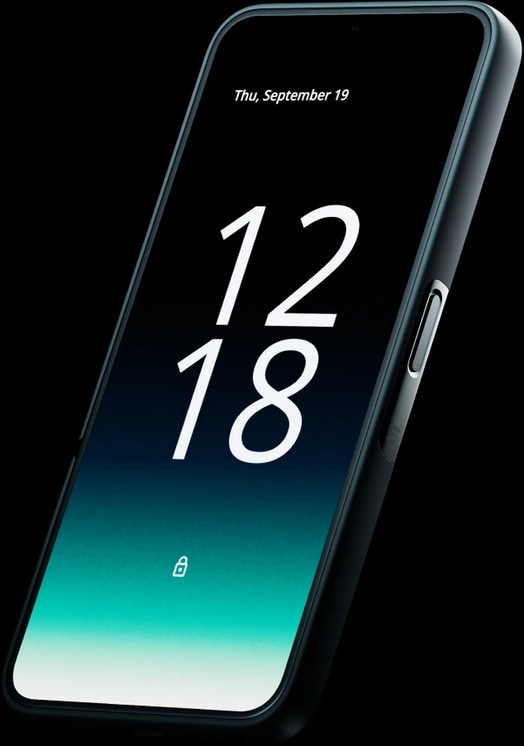
Verify on the go.
A Solana Mobile app is in development for the Solana dApp Store, targeting Seeker. Native sensor APIs extend the biometric surface, and Trust Score carries across every dApp in the mobile ecosystem.
Native sensor access
Direct accelerometer, gyroscope, touch, and microphone capture through native APIs with an Android microphone permission gate.
Native APIs give the client direct timing control. They do not authenticate sensor origin.
Touch and motion timing research
Measure whether a physical touch produces a time-aligned response in native motion sensors across supported devices.
Native attestation can bind app and device integrity evidence to the submitted request while this signal is evaluated.
Solana dApp Store distribution
Publish a hardened Android client for Seeker and other supported Solana Mobile devices.
Future notification support can remind users when a policy requires a fresh verification.